
Massachusetts City Directory Collections, Boston and Beyond
The Massachusetts directory shelf is broad, but no single volume set covers every town and year. The State Library of Massachusetts reports city and town directories and voting lists for most communities; its finding list is the place to confirm a specific town’s run. Boston has the deepest documented chronology, while the Boston Public Library holds directories, telephone books, resident lists, newspapers, maps, and family-history material in print, electronic, and microform formats. Use the town name and target year to ask for a local item, then check whether the copy is on a shelf, on film, or available through a partner site.
| Massachusetts collection | Known run | Where held | How to consult it |
|---|---|---|---|
| Boston city directories | 1789 to 1981; gaps and irregular editions before annual publication began | State Library, BPL, Boston Athenaeum, and digital partners | Print, microform, and digitized copies; check each year |
| Boston Lists of Residents | 1909 to 2014 | Boston Public Library | Many volumes digitized; reference staff can help locate the rest |
| Blue Books for Boston, Brookline, Cambridge, and Newton | Boston 1876-1937; Brookline 1885-1941 with gaps; Cambridge 1904-1907; Newton 1907 and 1912 | BPL and digital partners, including Internet Archive copies | Availability varies by title and year |
| City and town directories and voting lists | Most Massachusetts communities; exact runs vary | State Library of Massachusetts and local libraries | Search the State Library finding list or ask for a town and year |
| Boston-area telephone directories | Reel and year coverage varies | BPL Research Services | Microfiche or microfilm; ask staff for a named year |
Do not treat a blank year as proof that a household had left Massachusetts. Boston editions were absent in 1790-1795, publication from 1797 through 1819 was irregular, and a missing local copy may reflect a holding gap rather than a publication gap. The last two Boston editions listed by BPL are 1978 and 1981. Other towns have their own print histories, so a state-level search should be framed as a request for a place and date, not as one complete statewide book.
A Massachusetts City Directory Timeline from 1789 to 1981
Boston’s sequence shows how the form changed over time. The first directory used only the first letter of a person’s name to organize entries. Annual issues began in 1820, and later editions added separate business and address material. These shifts change what a search can find: a researcher looking up an address in an early book may need to identify a resident by name first, while a later reverse section can begin with the street.
The Boston Public Library’s genealogy guide to directory use lays out the publication milestones and the way the volumes are arranged.
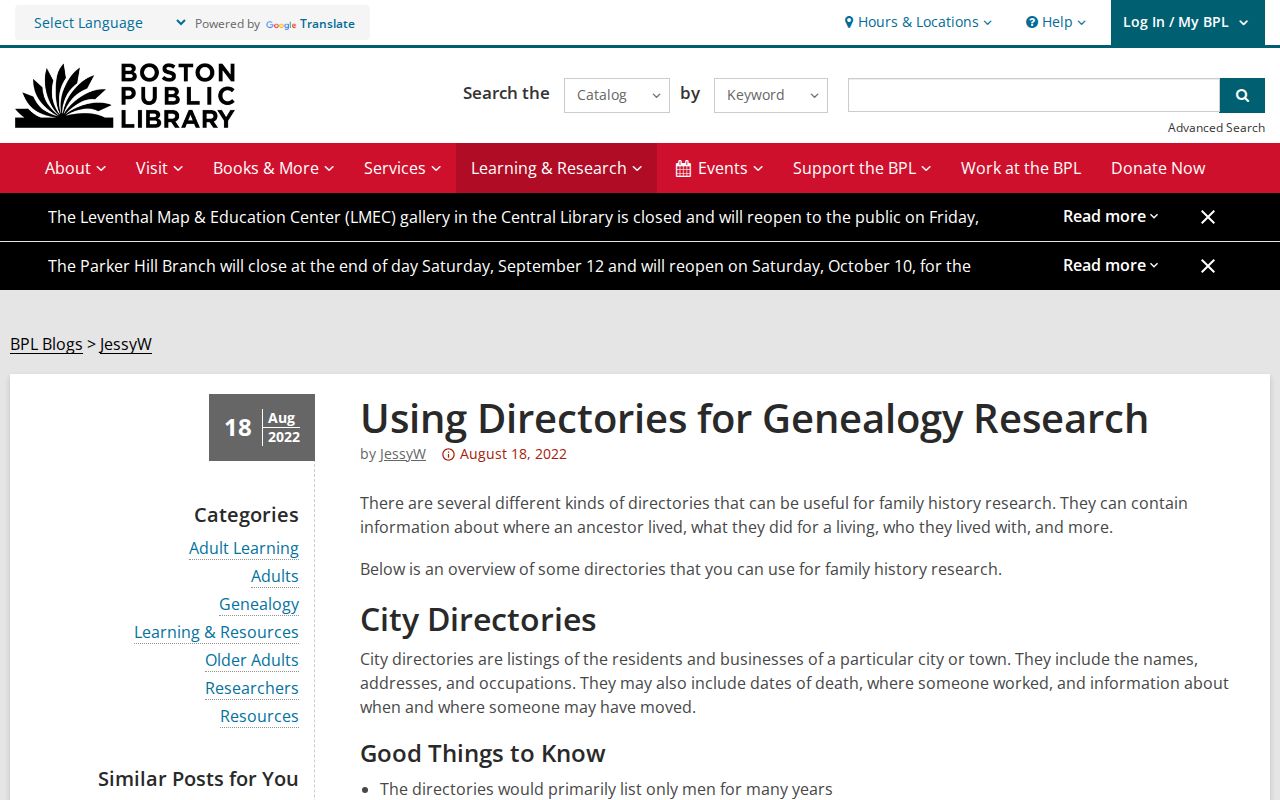
The chronology is a search aid, not a promise that every intervening edition survives or is digitized. Check the volume’s title page and catalog record before citing a year.
| 1789 | First Boston directory, organized by first letter only. |
|---|---|
| 1790-1795, 1796 | No editions for several years, then a second edition in 1796. |
| 1820 | Annual publication begins after an irregular early run. |
| 1813-1848/49 | People of Color are listed in a separate section, which changes how the name index must be searched. |
| 1847 | A separate business section is arranged by category. |
| 1930 | First separate address-organized listing for Boston. |
| 1933 | Wives begin appearing alongside husbands in the directory. |
| 1961, 1968 | Last edition with death dates, followed by the first numerical telephone directory. |
| 1978, 1981 | The final two Boston editions listed in the BPL guide. |
The Massachusetts City Directory Shelf Outside Boston
Boston is a deep local source, not a stand-in for the whole Commonwealth. The State Library’s Special Collections Department holds directories and voting lists for most Massachusetts communities. It is in Room 55 of the State House at 24 Beacon Street in Boston. The library highly recommends an advance appointment; its Special Collections phone is 617-727-2595 and its email is Special.Collections@mass.gov. Ask for a specific town, title, and year so staff can confirm a shelf or finding-list entry before a trip.
Local public libraries are another important path. Their catalogs may list city directories, telephone books, town histories, newspapers, yearbooks, and genealogy databases licensed for library use. A local-history desk can also identify microfilm or a partner institution that a broad catalog search missed. Boston Lists of Residents are not the same as city directories: they can reflect street-list or registered-voter records and carry a date or status context. Massachusetts Historical Society, university libraries, church or ethnic archives, and town historical societies can hold family papers, local directories, or institutional lists, but their holdings depend on the collection. Search the catalog first and confirm access with the repository.
Collection note. A catalog record, a library copy, and an online scan can differ, so confirm the format and year before making a trip or citing an entry.
Digital Paths into Massachusetts City Directories and Local History
Some directories are available through library and archival partners, but digitization is uneven. Digital Commonwealth provides a statewide search and browse portal for digitized newspapers, photographs, maps, and collections contributed by Massachusetts institutions. Search by town, institution, street, and personal name, then check the item record for its date and holding organization. A result may be a related map or photograph rather than a directory entry, which still can help place a person in the right neighborhood or period.
Digital Commonwealth’s browse and search collection gives researchers a way to move between material contributed by libraries and archives.
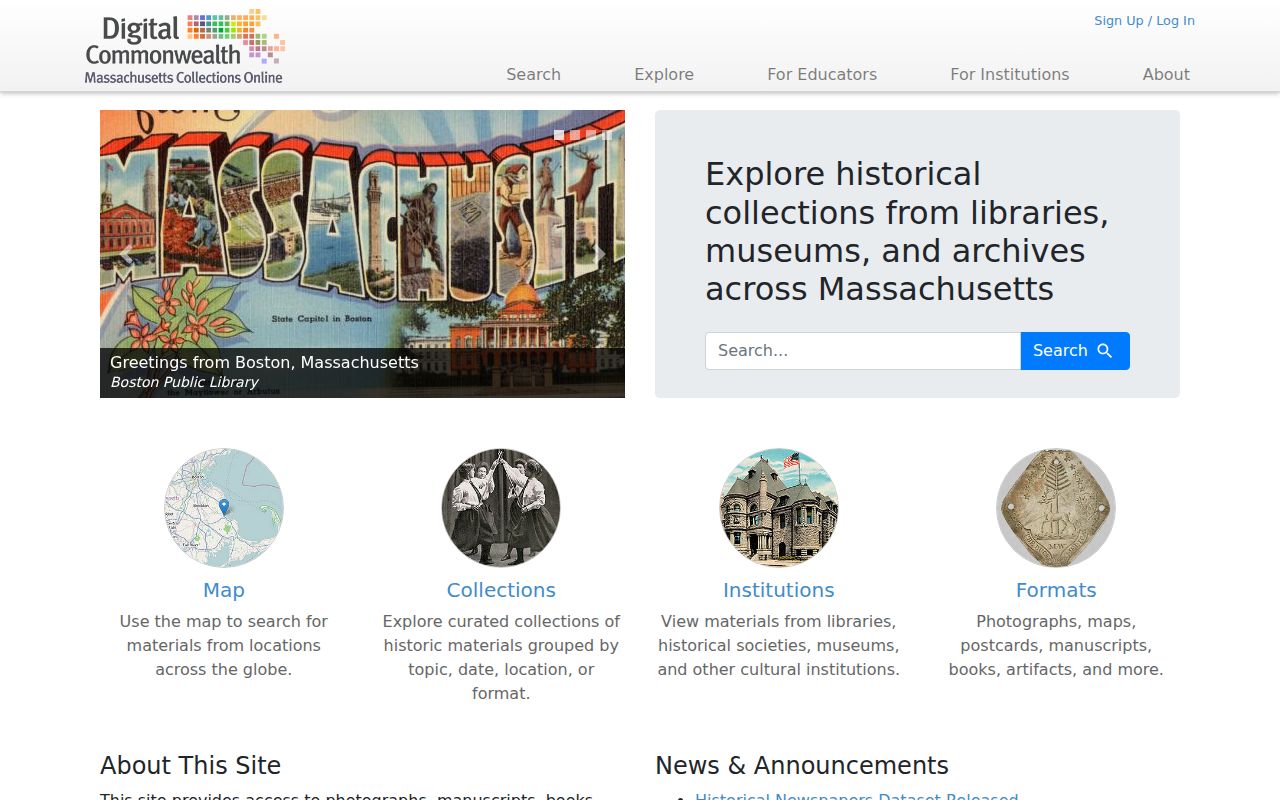
Use the result page to note the contributing institution, item title, and date range, then follow its access instructions. For newspapers or databases licensed by a library, remote use may require a library account or an on-site visit.
For manuscript, building, cemetery, and town-plan material, search the Massachusetts Archives Digital Repository as well as local catalogs. Boston’s archive catalog can surface building plans and other city records that add context to a directory address; its collections have off-site storage and access instructions, so a catalog hit does not mean same-day retrieval.
The Boston Archives collections catalog describes the searchable collection and the route to request original material.
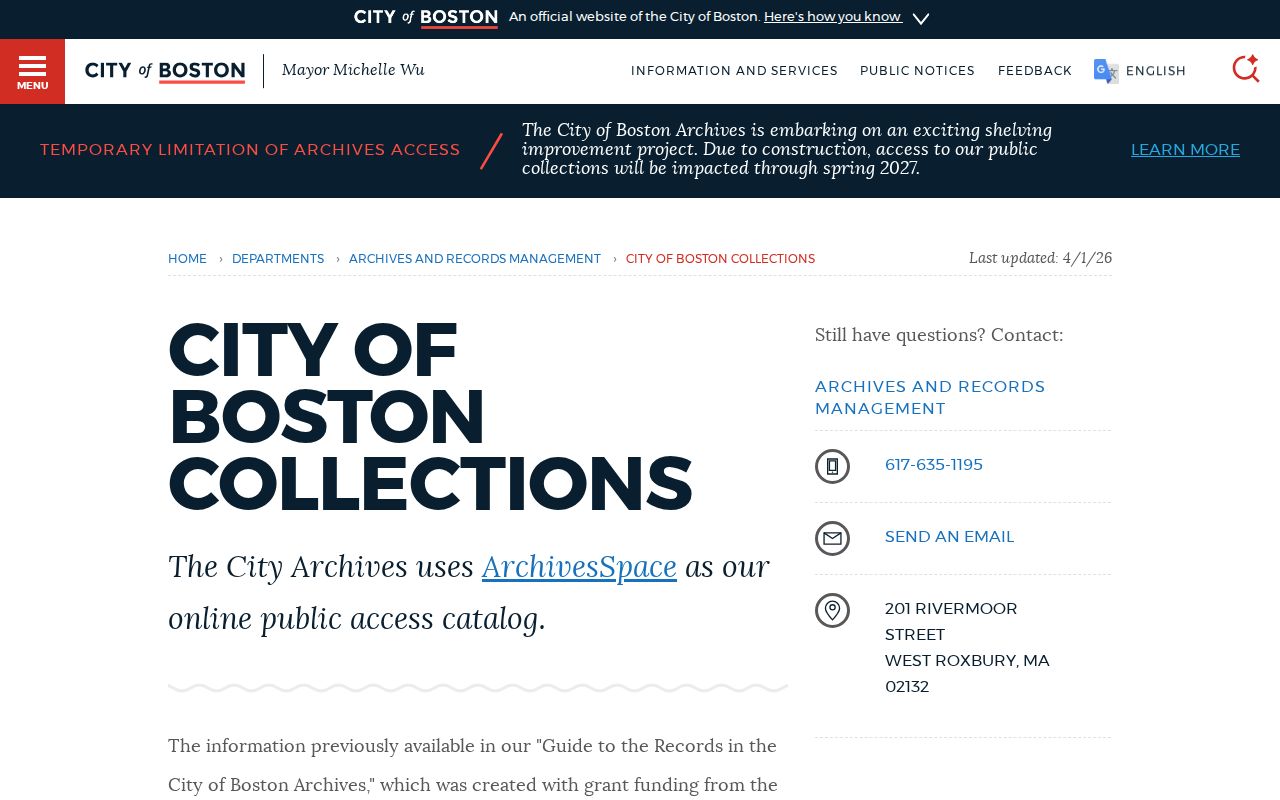
As of the 2026 access notice, a Boston Archives shelving project affects access through spring 2027. Many collections are off site, same-day or walk-in retrieval is unavailable, and a recall needs at least five business days. Check current instructions before planning a visit.
Use archival plans as evidence about a site or building, not as a directory of the people who lived there. Pair them with a named entry or another dated record.
Reading Names and Marks in a Massachusetts City Directory
A Massachusetts city directory entry is a compressed line, not a census of a household. A typical Boston entry may link a name to an occupation or employer and an address. Some editions add a spouse or relationship notation, while the organization and abbreviations change by year. Earlier Boston books primarily list men; women may appear as household heads, and married women begin appearing in parentheses beside husbands in the 1930s. By about the 1950s, adult women are commonly listed under their own names. Children generally do not appear, so a single entry cannot establish everyone who lived at an address.
| Name | Surname and given name or initials; some later entries show a spouse in parentheses. |
|---|---|
| Work or business | An occupation, employer, or business designation when the edition includes one. |
| Address | House number and street; note the exact spelling and any residence or boarding mark. |
| Household clue | A spouse, widow, or household-head notation may help link people across years. |
| Volume clue | Publisher, year, page, section, and the front-matter key that defines abbreviations. |
- Criss-cross directory
- A reverse listing arranged by street and house number, leading from an address to a named occupant or business where the local volume includes it.
- Householder index
- A name-based entry list for the person or household head the publisher chose to include; it does not list every resident.
- Abbreviation key
- The volume’s own guide to shortened words and marks. Read it before interpreting a symbol, and keep the key with any notes.
Household annotations vary across directories, so do not assume an abbreviation has the same meaning unless the volume explains it. Record the entire line and page reference rather than copying only the name. This preserves a way to recheck whether an abbreviation, section heading, or nearby entry changes its meaning.
Address Sections and the Criss-Cross Era in Boston
Boston’s first separate address-organized listing appeared in 1930. Before that point, a researcher often has to find the person by name, record the address, and then see whether a street section or reverse directory can connect the address to another occupant. Later address-first searching can be more direct, but the exact reverse-directory run depends on the place and collection. BPL holds a large Boston-area telephone-book collection on microfiche and microfilm and only a limited set of resident lists for other Massachusetts communities. Ask Research Services at research@bpl.org for a town and year.
Address spellings need the same care as names. Boston annexed South Boston in 1804, East Boston in 1836, parts of Roxbury in 1868, Dorchester in 1870, Brighton and Roslindale in 1873, additional communities in 1874, and Hyde Park in 1912. A historical listing may use the former town or neighborhood rather than the current Boston address. When an entry seems to vanish, check the street name and number in the year’s map or municipal record before treating it as a move.
For current parcel, owner, and street-level records, the Massachusetts street directory guide explains the address-keyed search chain; the historical volumes here answer a different question about what a publisher recorded in a particular year.
Trace a Massachusetts Household Across Directory Years
A directory gives an annual or occasional point in a longer household story. Keep the original spelling, address, work description, spouse notation, publisher, year, and page together. The following sequence uses the entry as a lead and checks it against a different record type.
- Choose a town and a year, then search the name section and note the full entry and page.
- Check one or two nearby editions for the name, address, occupation, and spouse notation.
- Where an address section exists, search the street and house number for another named occupant.
- Compare the directory with the nearest released federal census and note which household details agree or differ.
- Use an obituary, newspaper notice, cemetery record, or probate index to test a possible move, death, or family link.
Federal census schedules are released under the National Archives’ 72-year rule, so the 1950 census is public and later schedules must be checked against the current release schedule. Census pages show a household at a point in time; they do not fill every gap between directory years. A name missing from one edition may reflect an incomplete volume, a changed spelling, a change in who was listed, or a move. Use the next dated record to distinguish these possibilities.
Pair a Massachusetts City Directory with Maps and Other Records
Maps and newspapers help keep an address tied to the right place. BPL’s Leventhal Map Center has Boston fire-insurance and real-estate atlases and urban atlases for other Massachusetts towns. The Library of Congress Sanborn collection is another route, but coverage varies by town. Compare a directory address to a map from a nearby year to see whether a street name, building footprint, or block pattern changed. A map can support an address interpretation; it cannot prove who occupied the building.
Digital Commonwealth and local-library microfilm can surface dated news stories, photographs, or maps around a missing directory year. Massachusetts Archives holdings include town plans and cemetery photographs, and the Archives holds statewide births, marriages, and deaths from 1841-1935. FamilySearch images cover large portions of 1841-1930. The Archives genealogy guide also points to passenger manifests, naturalization, military, and probate records. Local cemeteries may keep interment cards or deeds at the clerk or cemetery division.
Boston’s historic headstone search can support a name trail, but its data comes from legible markers surveyed in the 1980s, covers 16 historic burying grounds, and is capped at 500 results. It is not a full burial register.
| Historic headstone search | What it accepts or returns |
|---|---|
| Search fields | Last name, first name, date of death, and location number. |
| Result details | Name, date of death, and location code for a legible surveyed marker. |
| Limit | Up to 500 results; absence from the index does not establish that no burial exists. |
If no directory entry appears, ask a library for the exact run and nearby editions, then use the newspaper, map, cemetery, or archival route that matches the question. Keep each source’s limits visible in your notes rather than treating a partial name match as a settled identity.